
HOW TO CHOOSE THE RIGHT INVESTMENT FUNDS AND STRATEGY
More investment choice can make it tempting to chase the latest top-performing fund, but trying to time the market can hurt long-term returns.
Investors have more choice than ever before. In South Africa, 1 934 funds are currently registered as collective investment schemes, including unit trusts and ETFs. When global funds are included, the number rises to more than 140 000 regulated open-ended investment funds and mutual funds.
More choice, however, can create more confusion. With so many funds and data points to compare, investors should avoid micro-managing their portfolios or constantly chasing the highest recent returns.
No fund manager can consistently deliver the best return every year over a long investment cycle. Even strong managers will go through periods of underperformance.
One of the biggest mistakes investors make is trying to achieve the best return at all times. In many cases, a more appropriate goal is a suitable and consistent return that supports the investor’s needs. Chasing the top performer can damage long-term results.
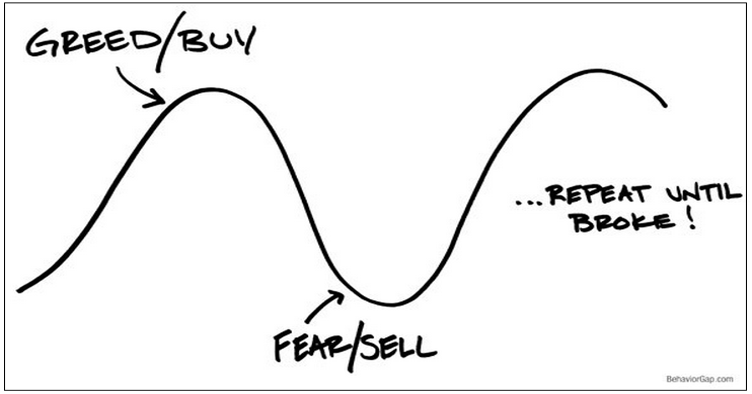
Investor behaviour plays a major role in long-term outcomes. Many investors make emotional decisions and often earn lower returns than the funds they invest in. This usually happens when investors try to time return cycles.
They become uncomfortable when their funds underperform, sell out, and move into funds that have recently performed well. This is the opposite of the basic investment principle of buying low and selling high. Repeating this behaviour can lead to disappointing portfolio returns over time.
Carl Richards illustrates this behaviour in his book The Behaviour Gap:
We often discuss this with clients when funds underperform, especially during periods of market volatility. Some investors want to reduce risk completely and move to cash, while others want to sell underperforming funds.
My response is always the same: deciding to disinvest may feel easy, but the harder decision is knowing when to re-enter the market or the fund.
It is also important to remember that every investment portfolio will experience negative returns at some point. Negative returns are not necessarily bad; they are part of the investment cycle and can create opportunities for fund managers.
The following “smartie box” comparison illustrates the typical characteristics of several prominent balanced funds.
The table below shows annual returns to 31 March 2026 for selected large balanced funds in South Africa. The highlighted cells show the three best-performing funds in each calendar year and over the 10-year period.
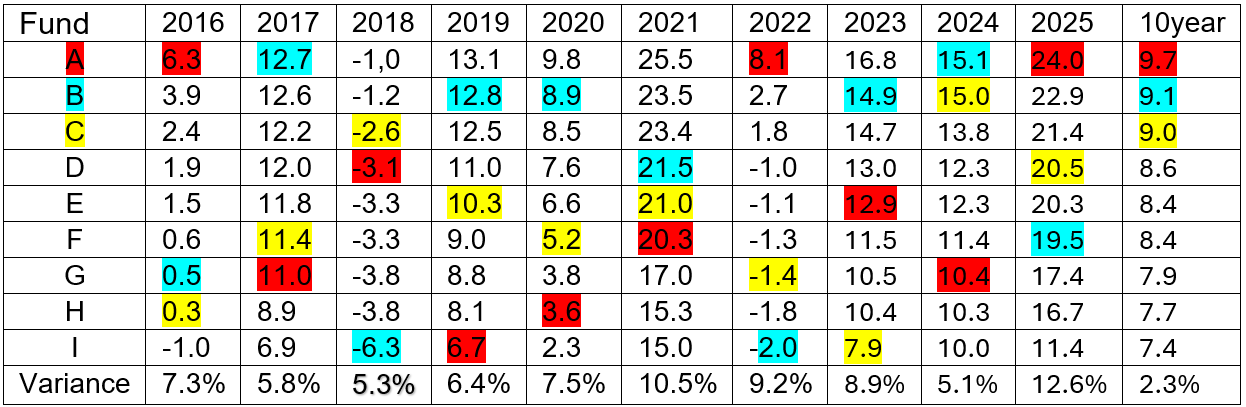
The smartie box highlights several important points:
No single fund manager is consistently the best performer.
Strong years are often followed by weaker years, and weaker years are often followed by stronger years.
The difference between the best and worst performer can be large in any single year, but long-term results tend to be more closely matched.
Combining fund managers with low correlation can help deliver more consistent returns, especially for investors drawing income from their portfolios.
Today’s favourite fund may become tomorrow’s disappointment, and today’s disappointment may become tomorrow’s favourite.
Most fund managers will be right at some point in the investment cycle.
Choose fund managers for clear, understandable reasons and give them enough time to deliver.
The graph below shows the relationship between positive and negative months over a 26-year period. Portfolios with higher equity and offshore exposure are likely to experience more volatility. For this reason, it can make sense to reduce equity exposure as your investment horizon becomes shorter.
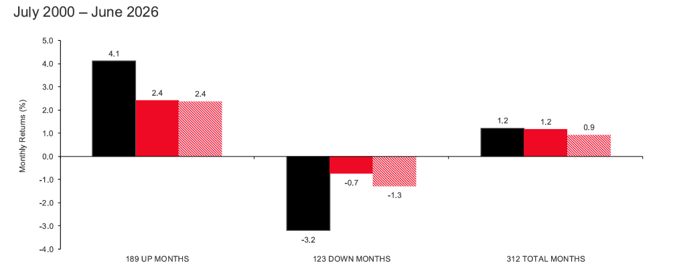
Legend: Black = ALSI; red = typical large balanced fund, as shown in the smartie box; striped = balanced fund benchmark.
The graph suggests that a typical balanced fund may experience negative months approximately 40% of the time over a 26-year period. Volatility is part of investing. It can also be helpful while building wealth, especially when making regular monthly contributions.
Investors should also expect prolonged periods of underperformance in some funds. A strategy may take years to play out, which can be uncomfortable when other funds are performing better.
This is common with value-based investment strategies. If investors lose patience too early, they may miss the stronger returns that can follow when the strategy starts working.
By the time they reinvest, the opportunity may already have passed. Some prominent South African and global funds generate returns in a lumpy and sporadic way, but the gains can be meaningful when they occur.
At any point, different funds will be at different stages of the investment cycle. Some funds have delivered exceptional returns over the past 12 months and are now receiving strong inflows after the event, according to the Corion report.
At the same time, some funds that performed very well in 2025 have lost momentum over the past six months and are experiencing significant outflows.
The irony is that one fund currently going through a difficult period has upside growth potential of more than 90%, based on underlying valuations, yet investors are leaving the fund. This may be the time to invest rather than withdraw.
Convincing investors to invest in an underperforming fund is difficult because most people prefer recent winners. It is equally difficult to persuade investors to remain invested during periods of underperformance. Doing nothing is not passive; it is an active decision that requires discipline.
So, how should you choose a fund manager or fund?
Start by understanding how the fund manager builds and manages the portfolio, including their investment philosophy, preferred asset classes, areas they avoid, and any clear biases or preferences.
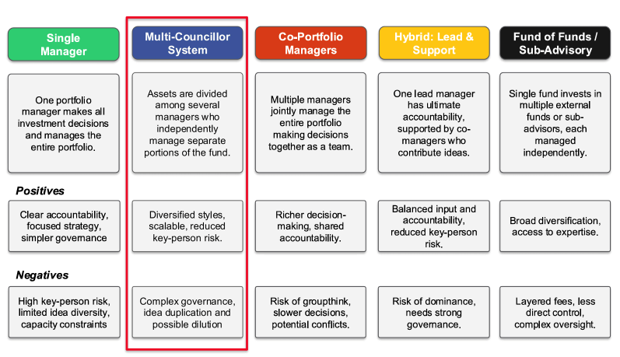
Investment houses use different strategies to achieve their objectives, and there is no single correct approach. Some managers are limited by size and therefore use simpler portfolio management structures.
When assessing a fund, consider how the investment team is structured, who the managers are, their experience, their track record, and the size of the fund. Costs matter, but they should not automatically prevent you from choosing a high-quality fund.
If you choose a single strategy, such as a balanced fund, consider using at least three funds.
Select managers with low correlation so that they are less likely to perform well or poorly at exactly the same time.
If fees are a concern, include a passive solution in the fund mix.
If Regulation 28 restrictions do not apply, consider adding a specialist local equity fund and a specialist offshore equity fund.
If you draw income from your investment, consider keeping two years of income in a specialist income fund and one year of income in a money market fund for withdrawals.
If you have a conservative risk profile, use medium-equity or low-equity funds as the foundation of the portfolio.
Alternatively, consider using a discretionary fund manager or buying guaranteed income through a life annuity, where appropriate.
I hope this provides useful guidance. If you would like help implementing these ideas, please feel free to contact us.
